
Sanding Wood: Effortless Tips for Scratch-Free Finishes
Achieving a flawless, scratch-free finish on your woodwork is a breeze with the right techniques. By mastering proper sanding grits and techniques, you can transform your projects into smooth, professional masterpieces that dazzle with perfection. Give your woodworking the finish it deserves – say goodbye to scratch marks for good!
Woodworking is a timeless craft that requires precision and skill, particularly when it comes to sanding wood. A crucial step in the woodworking process, sanding not only smoothens the surface of the wood but also prepares it for a flawless finish. However, many woodworkers face a common challenge – the dreaded scratch marks left behind by sanding. In this guide, we will explore effective techniques and tips on how to sand wood without leaving scratch marks.
Understanding the Importance of Proper Sanding Grits
One of the key factors in preventing scratch marks during sanding is using the appropriate sandpaper grits. The rule of thumb is to start with a coarser grit to remove imperfections and smoothly transition to finer grits for a polished finish. Coarse grits such as 80 or 100 are ideal for initial sanding to level the surface, while medium grits like 120 and 150 refine the surface further. Lastly, fine grits such as 220 and above are crucial for achieving a smooth, scratch-free finish.
Proper Sanding Technique
When sanding wood, it is essential to maintain a consistent and even pressure. Uneven pressure can lead to inconsistencies in the sanding process, resulting in scratch marks. Additionally, using long, smooth strokes in the direction of the wood grain helps prevent cross-grain scratches. Remember to avoid applying excessive pressure, as this can also cause scratch marks. Let the sandpaper do the work, and guide it gently across the wood surface.
Using Sanding Blocks or Pads
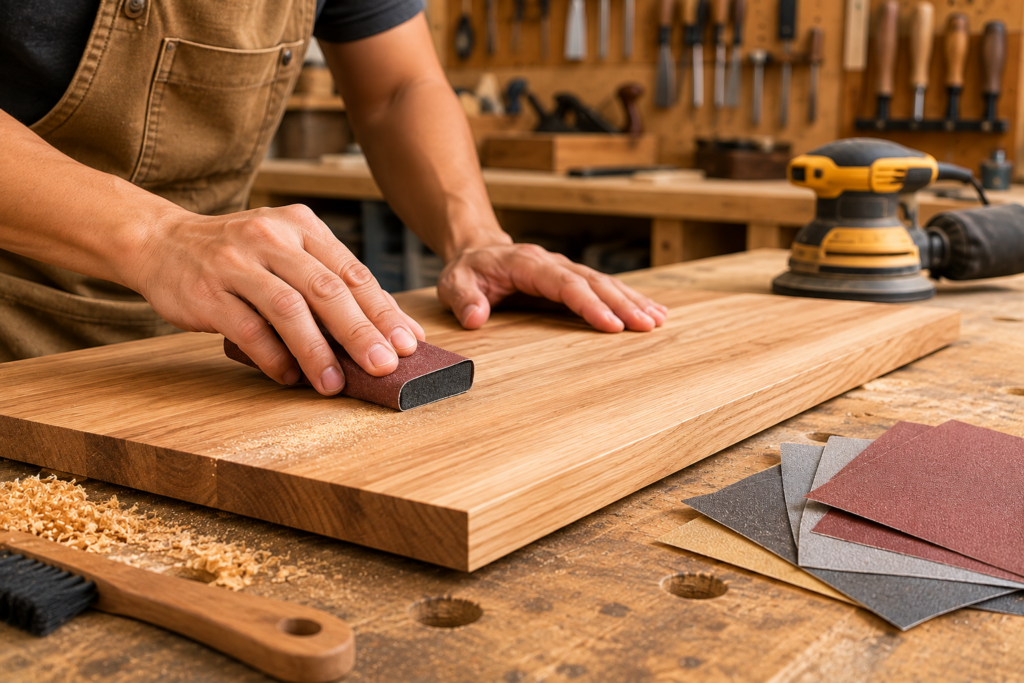
Sanding blocks or pads are useful tools for distributing pressure evenly during sanding, reducing the risk of scratch marks. These tools provide a flat, stable surface that ensures consistent sanding. When using a sanding block, wrap sandpaper around it and sand in straight lines to maintain an even surface. Similarly, sanding pads can conform to the shape of the wood, making them ideal for curved or intricate surfaces.
Opting for Random Orbital Sanders
Random orbital sanders are versatile power tools that can help achieve a smoother finish with minimal scratch marks. Unlike traditional belt sanders or orbital sanders that move in a fixed direction, random orbital sanders combine both random orbiting and spinning movements to prevent swirl marks and scratches. When using a random orbital sander, switch to progressively finer grits for a seamless sanding process.
Checking Your Progress Regularly
To ensure that you are sanding effectively without leaving scratch marks, it is essential to inspect your progress regularly. Stop sanding periodically and run your hand over the wood surface to feel for any imperfections or rough spots. This hands-on approach allows you to detect scratch marks early and address them promptly before proceeding to the next sanding stage.
Final Touches: Using Proper Finishing Techniques
After sanding, it is crucial to apply a suitable finish to protect the wood and enhance its appearance. Finishing techniques such as staining, varnishing, or painting not only add aesthetic value but also seal the wood surface, preventing moisture damage and prolonging its lifespan. Choose a high-quality finish that complements the wood species and your desired look.
In conclusion, mastering the art of sanding wood without leaving scratch marks requires a combination of proper technique, the right tools, and attention to detail. By selecting the correct sandpaper grits, maintaining consistent pressure, using sanding blocks or pads, opting for random orbital sanders, checking your progress regularly, and applying suitable finishes, you can achieve professional-looking results in your woodworking projects. Practice patience and precision, and soon you’ll be able to sand wood flawlessly, leaving behind a smooth, scratch-free surface.