
Big Ideas, Small Spaces: How to Design a Small Garage Woodworking Shop
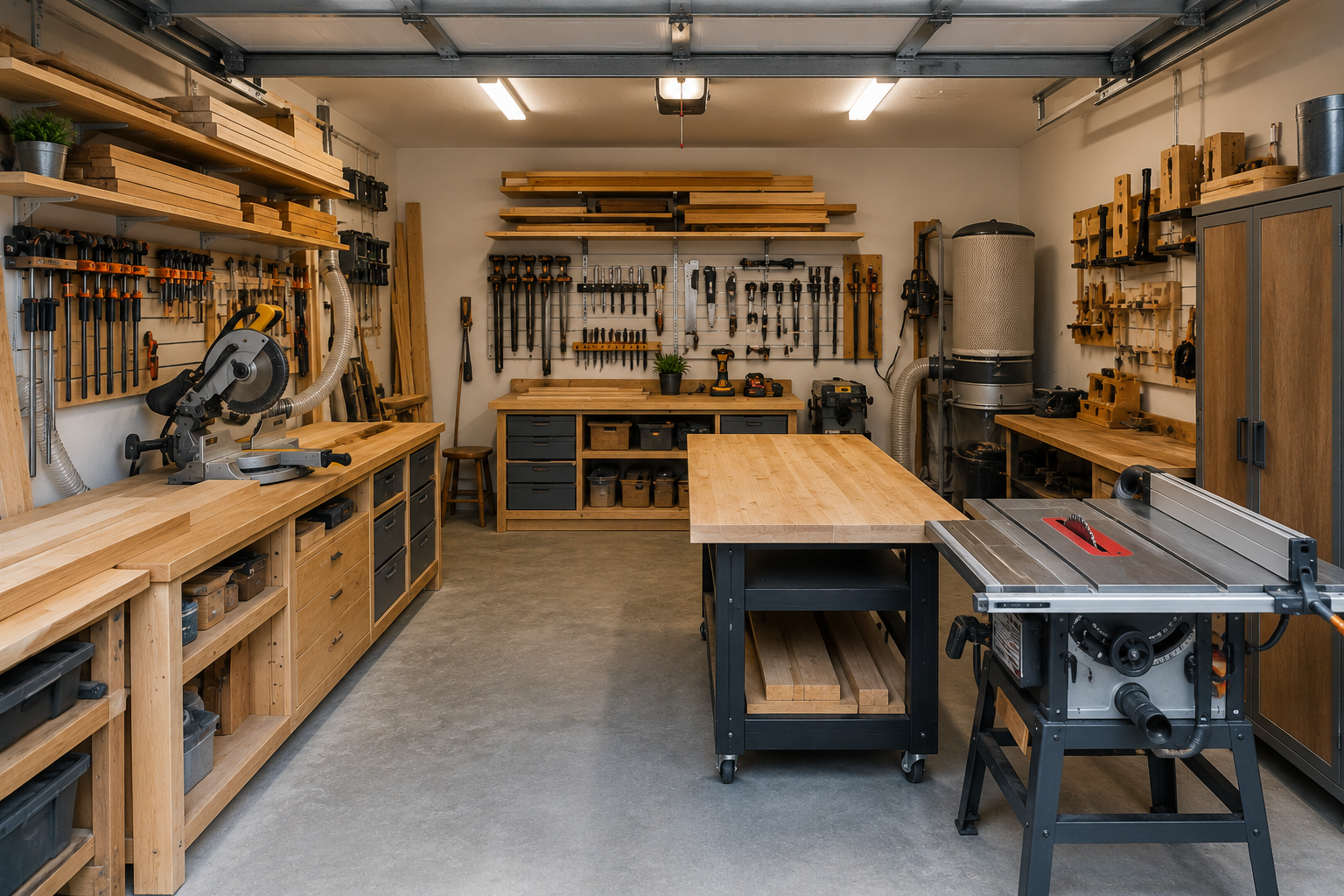
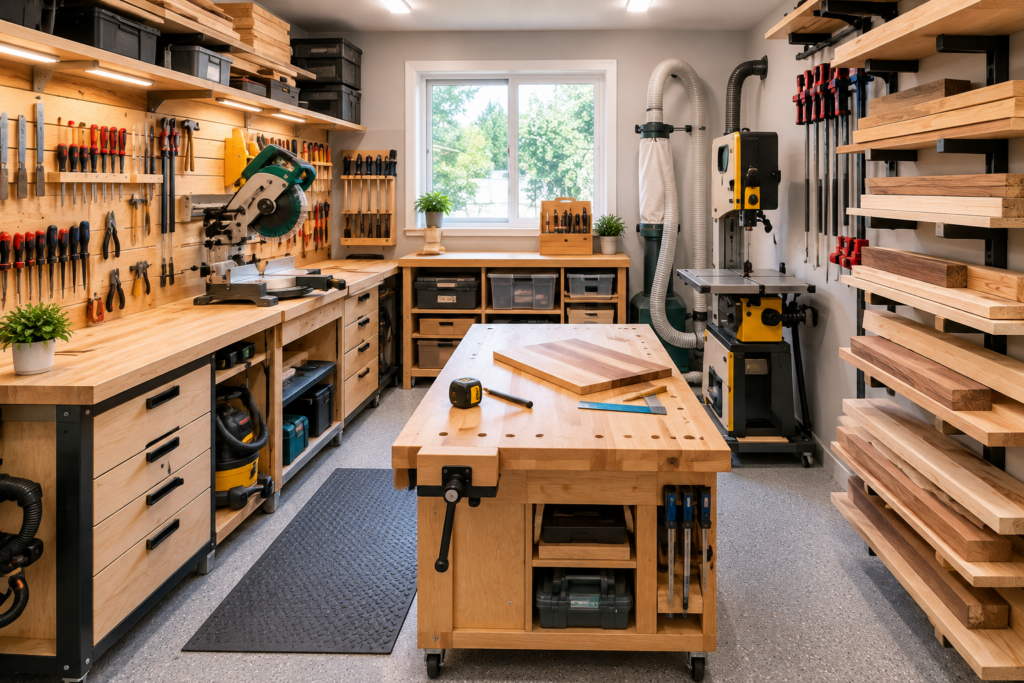
Small garage woodworking shop with a central workbench, organized tools, lumber racks, storage cabinets, and space-saving workstations.
How to Design a Small Garage Woodworking Shop
Designing a small garage woodworking shop requires a focus on mobility, vertical space utilization, and localized dust management to create an efficient workspace. Transforming a shared single-car bay or a tight corner of your garage into a high-functioning woodshop is entirely achievable with careful planning. By treating your limited square footage as a three-dimensional grid, you can fit pro-level capabilities into a compact footprint without feeling cramped.
1. Map Your Workflow and Zones
Before moving heavy machinery into place, map your floor plan based on how lumber actually moves through your space. Grouping your tools logically prevents you from constantly wrestling with long boards.
- The Breakdown Zone: Place your lumber storage racks close to the garage door. This allows you to unload raw sheet goods or heavy boards directly from your vehicle without hauling them across the room. Position your miter saw station nearby to quickly crosscut rough stock down to manageable sizes.
- The Milling Perimeter: Arrange your jointer and thickness planer flush along the outer walls. Keeping these machines against the perimeter leaves a wide central “racetrack” clear for walking and handling assembly.
- The Central Hub: Position your table saw and your primary assembly workbench near the center of the shop. This gives you the mandatory 360-degree clearance required to safely feed large workpieces and assemble finished furniture.
2. Put Everything on Wheels
In a tight garage woodshop, fixed tools are a luxury you cannot afford. Embracing complete mobility lets you rapidly reconfigure the entire room for different phases of a project.
- Heavy-Duty Locking Casters: Equip every tool cabinet, band saw, and workbench with total-lock casters. Foot-activated lever casters allow you to slide a 400-pound workbench with one foot and lock it securely in place so it won’t budge while hand-planing.
- Flip-Top Tool Carts: Build or buy flip-top stands to double your tool density. You can mount a benchtop planer on one side and a spindle sander on the bottom. When you need the sander, simply flip the top over—saving you the footprint of an entire extra cart.
- Leveling Solutions: Garage floors are naturally sloped toward the door for drainage. Use self-leveling mobile casters to keep your extension wings perfectly flat and flush with your main work surfaces.
3. Master Vertical Wall Storage
When floor space is scarce, maximize your vertical real estate. Look up at your bare studs and drywall to find hidden storage capacity.
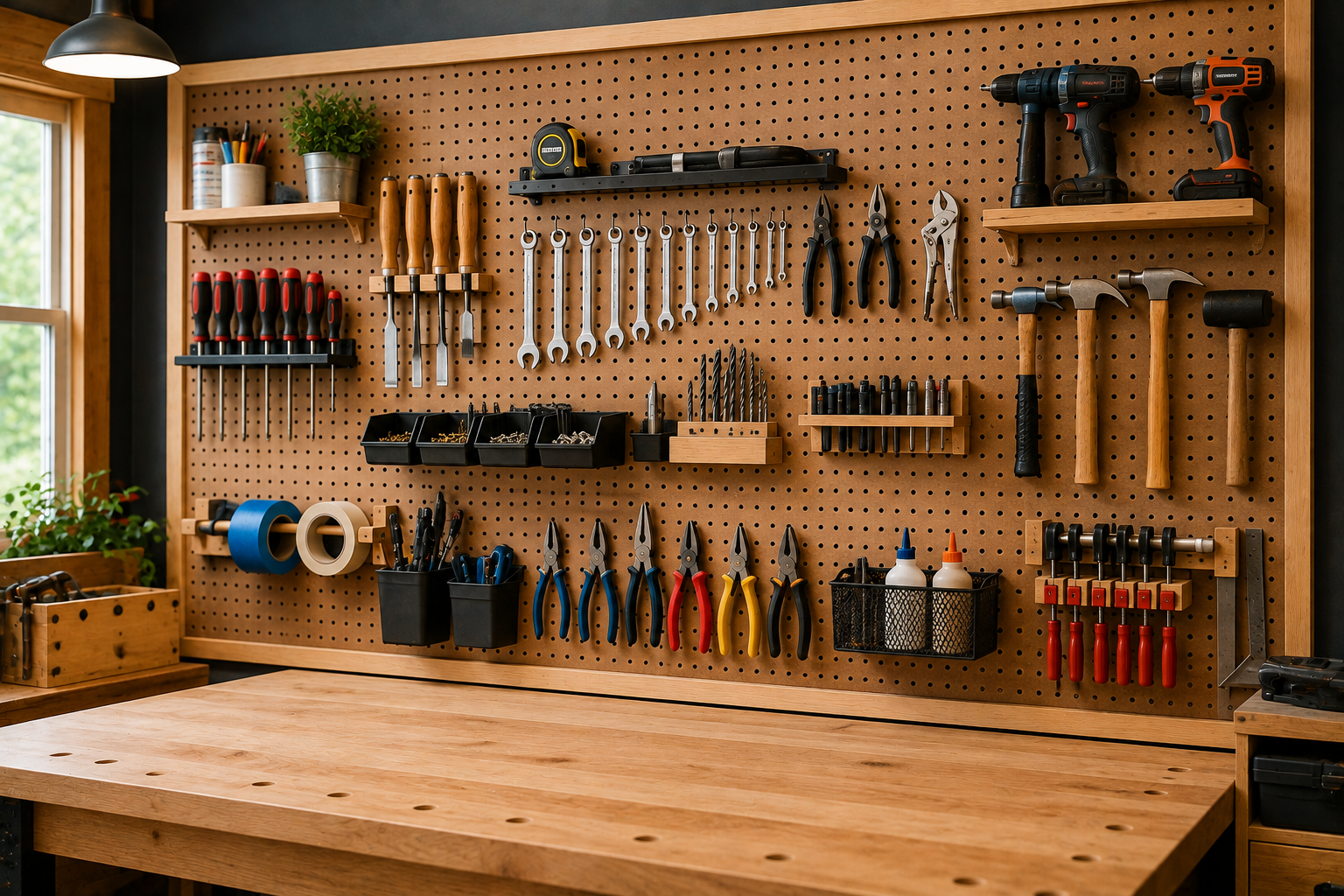
- French Cleat Systems: Mount 3/4-inch plywood backer sheets to your wall studs and install a modular French cleat system. This gives you the flexibility to hang custom tool holders, drill caddies, and small parts bins. You can instantly rearrange your layout as your tool collection grows.
- Fold-Down Work Surfaces: Install a hinged outfeed table or a fold-down router station that drops flat against the wall when it’s not in use. This is particularly useful if you still need to park a vehicle in the garage at night.
- High Lumber Racks: Mount heavy-duty metal lumber brackets high up on the walls, just below the ceiling. Storing your long-term wood supply overhead clears up valuable floor paths and keeps boards dry and flat.
4. Implement Smart Dust Collection
Wood dust in an enclosed residential garage isn’t just messy—it is a serious respiratory hazard and a fire risk. A multi-layered strategy will keep your air clean.
- Two-Stage Shop Vac Cyclone: If you don’t have room for a massive industrial dust collector, use a powerful shop vacuum paired with a cyclic separator. The cyclone drops 99% of large chips into a bucket before they ever reach your vacuum, preventing premature suction loss.
- Flexible Hose Drops: Instead of running rigid, permanent PVC ducting through a tiny space, use a single high-quality flexible hose with quick-connect fittings. You can roll your tool to the center of the room, snap the hose onto its dust port, and swap it to the next tool in seconds.
- Ambient Air Filtration: Hang a dedicated air filtration unit from your ceiling joists. This cycles and scrubs the microscopic airborne dust particles out of the garage environment while you work.
5. Upgrade Lighting and Power Comfort
A dark shop is a dangerous shop. Garages are notoriously under-lit, usually featuring a single, dim incandescent bulb.
- Daisy-Chained LED Shop Lights: Install overhead, linkable LED light strips across your ceiling. Aim for bright, daylight-spectrum illumination to eliminate harsh shadows at your cutting stations.
- Bright Interior Painting: Coat your dark garage walls and ceiling in flat white or off-white paint. This reflects the maximum amount of light back down onto your workpieces, making the entire room feel much larger and safer.
- Anti-Fatigue Flooring: Standing on cold, hard concrete floors for hours causes leg and back strain. Lay down interlocking foam tile mats or heavy rubber utility mats in front of your primary workbench and table saw areas.